A client came to me needing help preparing for a high-stakes professional interview. The pressure was real. The timeline was tight. They needed more than encouragement; they needed a strategy.
I sat down with my AI-assisted coaching tools and got to work.
Here is what happened next and why it matters.
What I Brought to the Table
Before I could do anything useful, the AI needed to know two things: who my client was and what they were walking into.
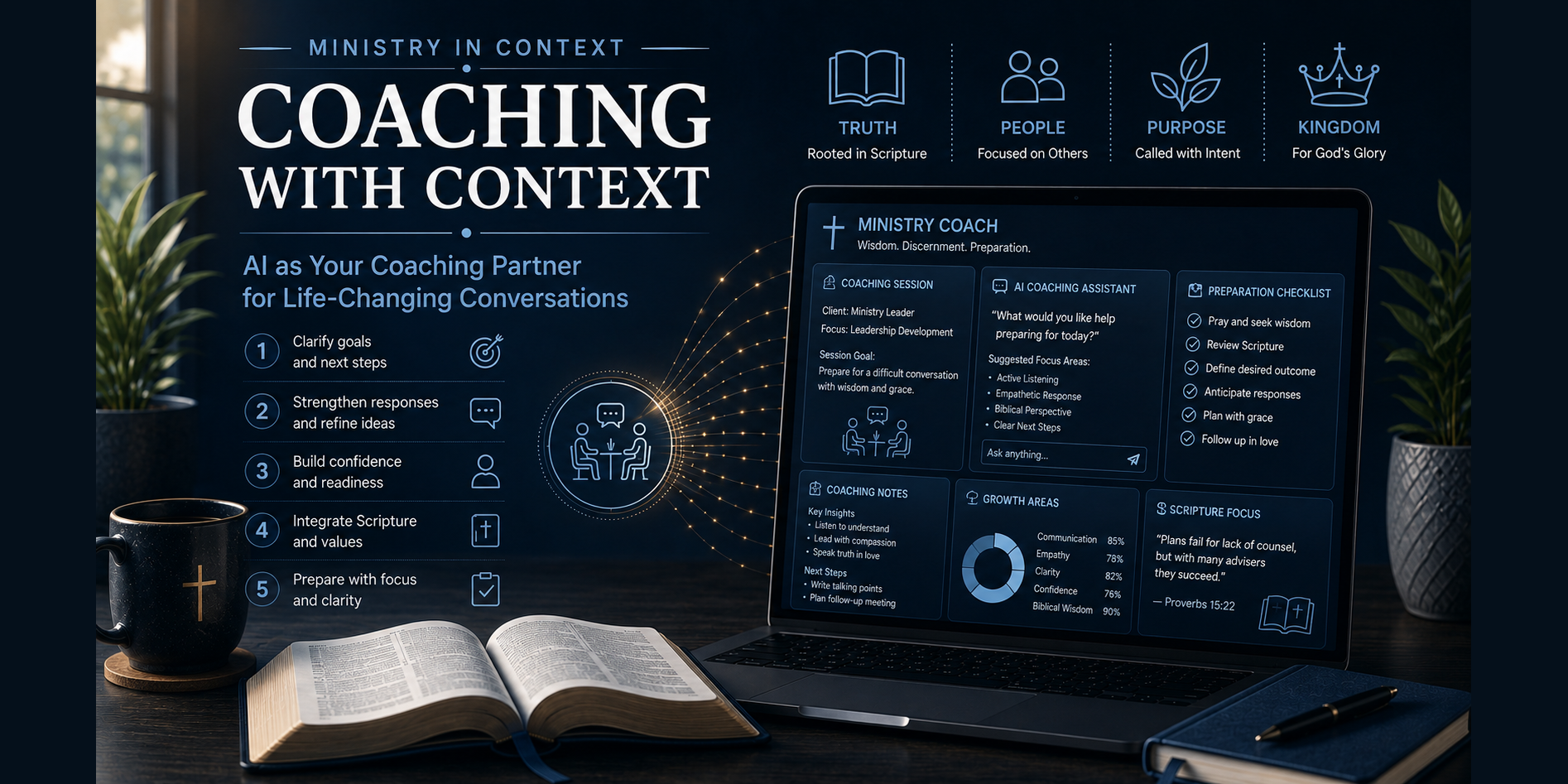
I had my context already loaded. My background, my coaching philosophy, my voice, my framework for how I approach people development — all of it was embedded in the system before the session started. The AI knew me. It knew how I think, what I value, and how I work.
But it knew nothing about my client.
So I did what coaches have always done: I gathered the materials. I collected my client's background information and the full description of the opportunity they were pursuing. I handed those over and let the process run.
The output was strong. We built a complete coaching strategy: a gap analysis between my client's experience and the role's requirements, a custom framework for how to present themselves, a full presentation outline with coaching notes, and a polished deliverable they could walk into that room with.
My client went in prepared. The session did what it was supposed to do.
But I kept thinking about what it didn't do — and why.
The Gap in the Room
Here is what I noticed: everything the AI produced, it produced about my client, not for my client.
I was the bridge. I translated. I applied. I took what the system generated and brought it back to a person it had never actually met.
That is not a flaw in the technology. That is a context problem.
The AI could only work with what it was given. I gave it my client's resume and the job description. Both are true, but neither is complete. A resume tells you what someone has done. It does not tell you how they think, what drives them, where they struggle, what they are afraid of, or what they are genuinely capable of beyond what is already on paper. A job description tells you what a role requires. It does not tell you what this particular person uniquely brings to that role that no one else can.
The AI worked with data. What it needed was context.
The Principle
The depth of the output is directly proportional to the depth of the context.
This is not an AI principle. This is a people principle.
A coach with no knowledge of their client gives generic advice. A coach with full context gives a word that lands.
A pastor who does not know their congregation preaches to a crowd. A pastor who knows their people speaks into lives.
The information you have access to determines the quality of the guidance you can give. That has always been true. What is new is that the tools available to us now can hold, process, and act on context at a scale that was not possible before. Which means the question is no longer just what do I know about the people I serve? The question is now how well have I equipped them to be known?
The Ministry in Context Framework
This is the foundation of what I call Ministry in Context.
Effective ministry, effective coaching, effective leadership all depend on the same thing: meeting people where they actually are, not where you assume they are. You cannot do that without context. And in a world where AI tools are becoming part of how we serve, prepare, and develop people, context is no longer just a pastoral virtue; it is a strategic asset.
In that coaching session, I had my context loaded. My client did not.
The result was good work produced at one degree of separation from the person who needed it most. I had to carry it to them. That works. It has always worked. But it is not the ceiling.
Imagine if my client had walked into that session with their own context already in place: their story, their voice, their values, their goals, their strengths and growth edges, all of it embedded and accessible. The coaching output would not have been about them. It would have been for them, built from the inside out, shaped by everything they bring to the table — not just the summary on their resume.
That is not a technology upgrade. That is a ministry upgrade.
What This Means in Practice
If you are a coach, a pastor, a mentor, or anyone who develops people for a living, the question worth sitting with is this: how much do the people you serve actually carry their own context into the work?
Most people show up to a coaching session or a counseling conversation with whatever is top of mind that day. They give you a slice. You work with the slice. That is the norm.
But what if part of your role is to help the people you serve build a fuller picture of themselves: one they can carry into every room, every decision, every season of growth?
That is what Ministry in Context is building toward. Not just AI-assisted coaching. Context-equipped people.
The tools are ready. The real work is helping people understand why being fully known is worth the effort.
Because you can only serve what you know. And the people you serve can only be served as deeply as they are willing to be known.